

What synastry is
Every birth chart is a snapshot of the sky at one moment and place. Synastry asks what happens when two of those snapshots are overlaid. Your Moon may sit near the other person’s Sun. Their Mars may square your Venus. Your Mercury might be in the same sign as theirs. Each of these contacts is a small theme in how you relate.
It works for any relationship that matters to you: a partner or partners, a best friend, a sibling, a parent, a cofounder, a band. The method is the same. What changes is which themes you pay attention to.
The two main tools: aspects and house overlays
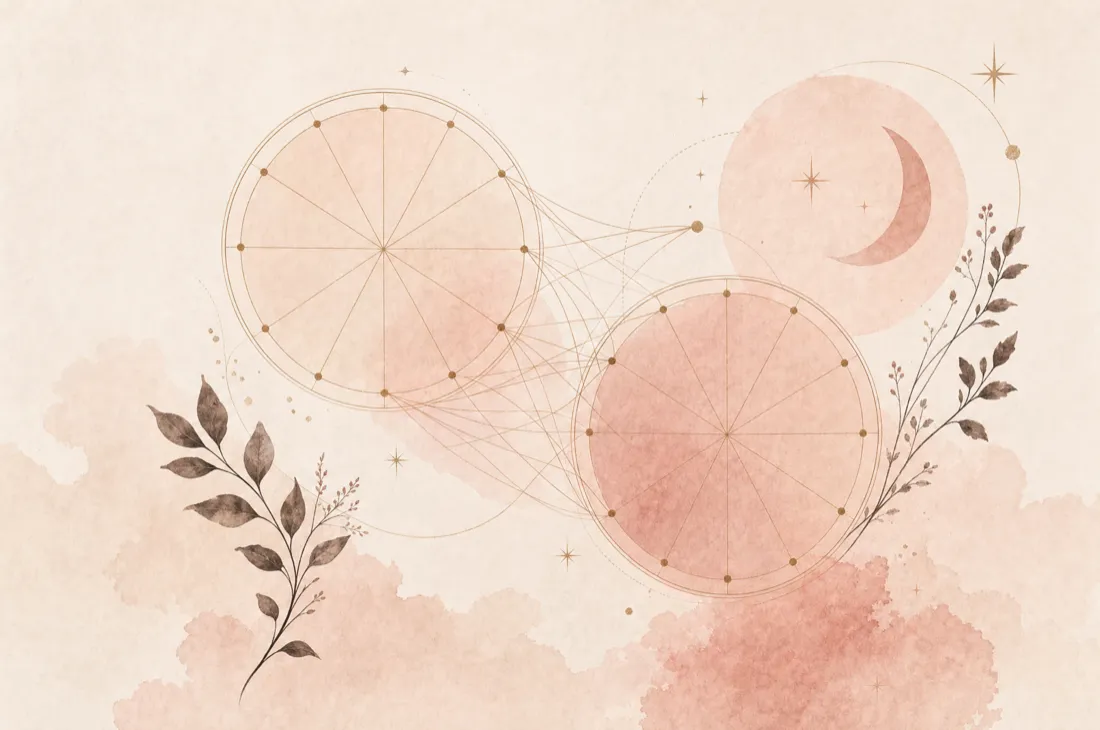
Cross-aspects are the angles between one person’s planets and the other’s. Astrologers use the same aspects as in a single chart:
- Conjunction (planets close together): the two energies blend and are hard to ignore.
- Trine and sextile (120° and 60°): ease and natural cooperation.
- Square (90°): friction that can feel like chemistry or like a recurring argument, and often both.
- Opposition (180°): attraction across a difference, and a pull toward balance.
House overlays show where one person’s planets fall in the other’s houses. If a friend’s Jupiter lands in your house of work, astrologers might read them as someone who expands your ambitions. House overlays depend on knowing at least one birth time; without it, natal reads only sign and aspect contacts. Unknown birth time? explains what still works.
Which contacts people look at first
- Sun and Moon contacts: how each person’s sense of self meets the other’s emotional needs. Often felt as “they get me.”
- Moon to Moon: whether your emotional rhythms are similar. Helpful for anyone you live with.
- Mercury contacts: how you talk, argue and make plans together.
- Venus and Mars contacts: affection, attraction and how you handle desire and conflict. Read more in Venus signs.
- Saturn contacts: commitment, responsibility and where one person may feel tested by the other. Often present in lasting bonds.
A single aspect never tells the whole story. Synastry is most useful when you notice repeating themes: three contacts that all point to easy conversation, or two that both describe tension around time and space.
Composite charts: the relationship as its own chart
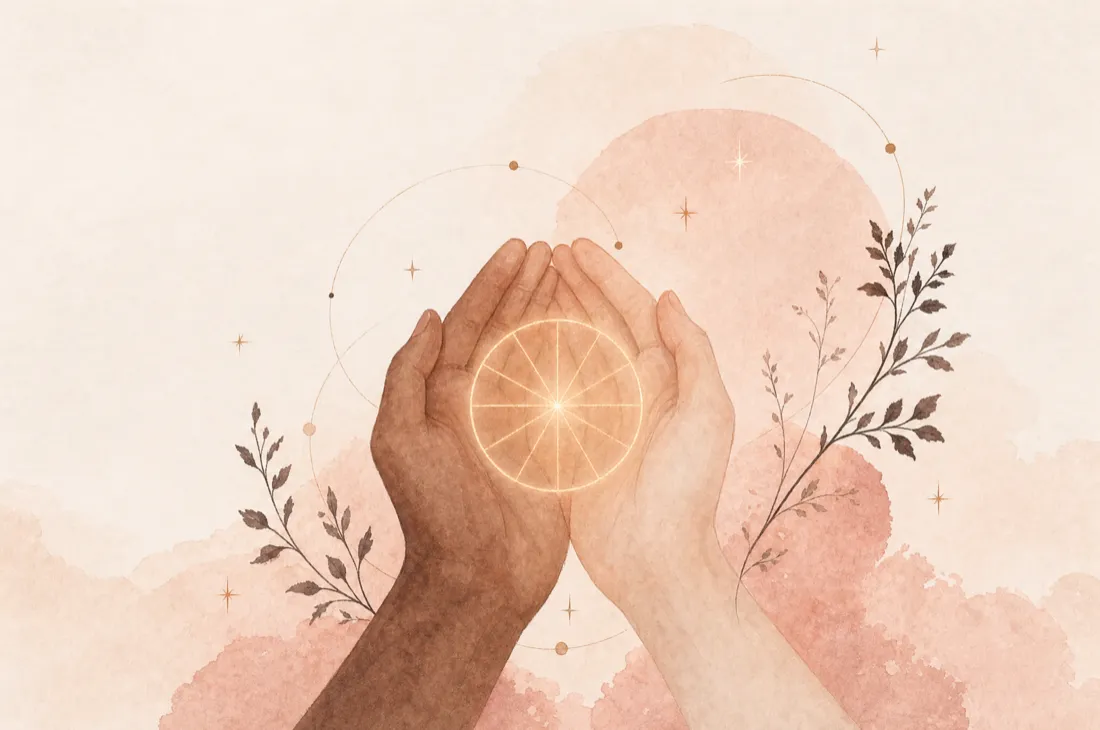

A composite chart takes the midpoint of each pair of planets (your Sun and their Sun, your Moon and their Moon, and so on) and builds a single new chart from them. Rather than asking how you affect each other, it asks what the relationship itself is like: its purpose, its mood, its habits.
Composite charts are symbolic constructions, not a picture of any real sky. Astrologers use them alongside synastry, not instead of it. You can see a composite for any two saved charts in Relationships.
Why natal doesn’t give you a compatibility score
Many apps turn synastry into a percentage. We don’t, on purpose. A number flattens a relationship into a pass or a fail, and it can’t weigh what actually matters: shared values, timing, effort, kindness, and the choices two people make. Charts full of squares belong to many long, happy relationships; charts full of trines belong to some that never took off.
Instead, natal describes themes: where the connection tends to flow, where it tends to spark, and what questions might be worth asking each other. The aim is a better conversation, not a verdict.
A note on consent
Birth details are personal. Synastry is at its best when both people are curious and have chosen to share their date, time and place. Compare charts with people who would be glad you did, and treat what you read as an invitation to talk rather than evidence about them.
Comparing your chart with a public figure is a lighter exercise. You can try it with celebrity charts, which use publicly available birth dates.